
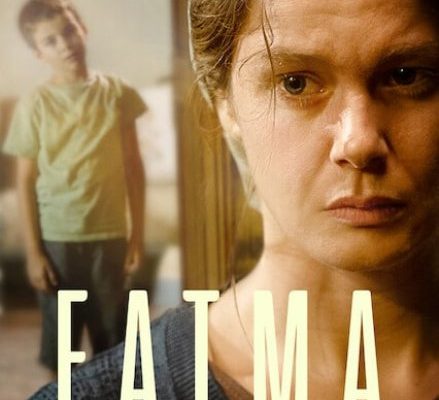
Ever felt invisible? In the gripping Turkish series Fatma, we follow the harrowing tale of an overlooked house cleaner who morphs into a cunning serial killer as she seeks her missing husband, all while confronting a past filled with trauma.
Advertisements
Premiering on April 27, 2021, Fatma is a Netflix miniseries comprising six episodes, with each lasting about 40 minutes. Directed by Özer Feyzioğlu and Özgür Önürme, the show features Burcu Biricik in a standout role alongside Uğur Yücel, Mehmet Yılmaz Ak, and Hazal Türesan. This production, designed as a Netflix original, highlights the platform’s dedication to diverse international stories.
Blending elements of crime thriller, psychological drama, and social critique, Fatma captivates viewers by exploring deep themes such as domestic abuse, class inequality, female empowerment through violence, and the complex metamorphosis of victims into aggressors. It uniquely portrays the path of a working-class woman, revealing her transformation from a silent victim to a formidable threat.
From Cleaner to Killer: A Desperate Search
At the heart of the story is Fatma Yılmaz, a middle-aged house cleaner whose existence has been a series of neglect and mistreatment. The narrative kicks off with her husband Zafer’s disappearance, pushing her into treacherous areas and criminal networks in her quest to find him, despite her trepidation and lack of familiarity with such surroundings.
This frantic search takes a dark twist when Fatma, in an act of self-defense, commits her first murder. What begins as a desperate attempt to locate her husband escalates into a chilling killing spree, as she realizes her position as a domestic worker allows her to navigate society unnoticed, making her the perfect predator.
Fatma Yılmaz: The Transformation of an Invisible Woman
Burcu Biricik’s portrayal of Fatma is nothing short of extraordinary, capturing her evolution from a subdued, traumatized cleaner to a calculating killer who wields her anonymity like a weapon. Throughout Fatma, Biricik masterfully illustrates the character’s journey as she embraces her power while grappling with the violence she’s capable of inflicting.
Fatma’s narrative delves into the psyche of someone who, after a lifetime of invisibility and powerlessness, discovers she can master life and death. Her transformation represents the series’ poignant exploration of how systemic oppression and abuse can mold unsuspected monsters, making her a figure both empathetic and fearsome as she harnesses her deadly skills.
Class Disparities and the Criminal Underworld
Uğur Yücel and Mehmet Yılmaz Ak embody various criminals who dismiss Fatma based on her social standing. Fatma effectively uses these characters to expose the societal biases against working-class women, shedding light on how these prejudices create opportunities for revenge or justice through violence.
The series vividly illustrates the class divides present in Turkish society, depicting how privilege shields some individuals while leaving others vulnerable to exploitation. Understanding these dynamics is essential to grasp why Fatma’s victims are blindsided and why her actions initially evade the notice of law enforcement.
Identity Through Violence: The Reckoning
As the series progresses, the tension peaks when Fatma’s killing spree escalates, leading her further down a path of self-loss amidst the chaos she creates. The relentless pursuit of her husband takes a back seat to her growing addiction to violence, challenging viewers to reconcile with a protagonist who has seamlessly transitioned from victimhood to villainy.
The climactic episodes reveal how trauma and empowerment through violence can corrupt even the most relatable characters. As the truth about her husband’s fate unfolds alongside the full extent of Fatma’s transformation, the narrative offers a formidable commentary on justice, vengeance, and the cyclical nature of violence.
Netflix’s Notable Achievement
The success of Fatma on Netflix stems from its ability to present an unconventional crime drama through the eyes of a working-class Turkish woman. The series struck a chord with global audiences eager for intricate female anti-heroes and compelling narratives that tackle class and gender issues within genre storytelling. With Burcu Biricik’s powerful performance, adept direction, and its unflinching portrayal of domestic violence and social disparity, Fatma has cemented its status as one of Netflix’s most discussed Turkish originals, despite being crafted as a limited series that concluded after six episodes.
Witnessing a Dark Metamorphosis
If you appreciate crime dramas that feature complex female leads and social critiques, Fatma is an essential binge-watch on Netflix.
Reasons to Watch This Impactful Series
Highlights:
- Remarkable lead performance from Burcu Biricik, crafting a nuanced, unforgettable anti-heroine
- Candid exploration of domestic violence and class issues within Turkish society
- Solid character development transforms viewer empathy into moral complexity
- Authentic representation of working-class existence and the invisibility of domestic laborers
- Crisp storytelling that balances tension with serious themes
Drawbacks:
- Graphic violence and unsettling themes may be overwhelming for sensitive viewers
- The protagonist’s evolution into a serial killer may be emotionally challenging to accept
- Limited six-episode format might feel too short for deeper character and thematic exploration
- Heavy themes of trauma and abuse provide little respite from the dark subject matter
- Some viewers might find it difficult to support a character evolving into a less sympathetic figure
Fatma delivers a distinctive viewing experience that utilizes crime thriller conventions to delve into profound societal issues while presenting one of the most intricate female characters in contemporary international drama.
Series Overview
- Episodes: 6 episodes (1 completed season)
- Available On: Netflix
- Year of Premiere: 2021
- Current IMDb Score: 7.4/10
- Genres: Crime Drama, Psychological Thriller, Social Commentary
- Production Type: Turkish Drama (Dizi)
- Status: Completed miniseries
- Main Cast: Burcu Biricik (Fatma Yılmaz), Uğur Yücel (Bayram), Mehmet Yılmaz Ak (Zafer)
- Antagonist: The institutional oppression and abusive men who have shaped Fatma’s existence, making her both a victim and a perpetrator